

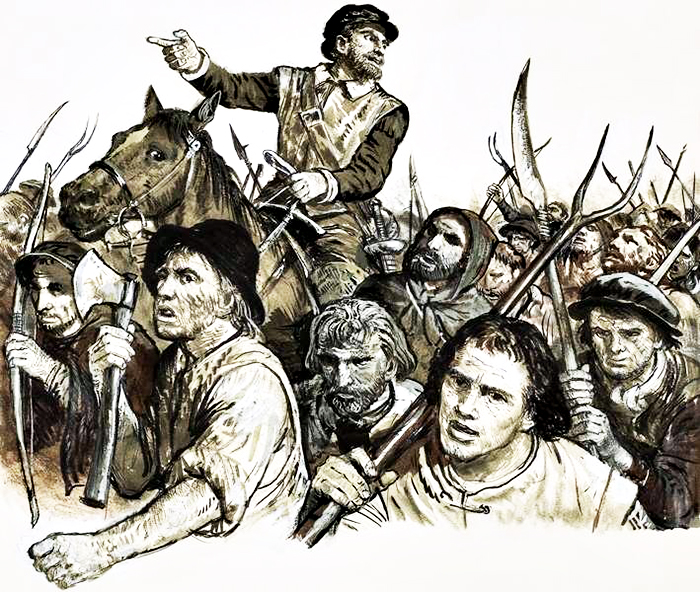
On this day, the attempts of a royal official, John Bampton, to collect unpaid poll taxes in Brentwood, Essex, England, ended in a violent confrontation which rapidly spread across the southeast of the country. Peasants, local artisans and even village officials rose up in protest, seeking a reduction in taxation, an end to serfdom, and the removal of King Richard II’s senior officials and law courts. Led by Wat Tyler, a contingent of Kentish rebels marched on London where they attacked the prisons, destroyed the Savoy Palace, set fire to law books and buildings in the Temple, and killed anyone associated with the royal government. Initially King Richard agreed to the rebels’ demands, but as soon as his militia managed to disperse the rebel forces, he rescinded his grants. The revolt, later to be known as “The Peasants’ Revolt” or “The Great Rising” continued throughout the country for six months before being finally extinguished.
Read Bob Lynn’s short story “The Day the Walls Fell”
about the Peasants’ Revolt HERE
Puoi trovare altre brevi notizie storiche QUI

Your comments are always very welcome.

 Ingliando