


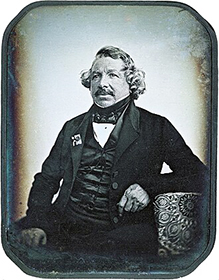
On this day, the French government presented the daguerreotype as a free gift to the world and published full working details of exactly how to use the innovative photographic process. The idea of permanently fixing the image obtained in the camera obscura had been around for some time, but it wasn’t until Niépce’s work in producing reproducible plates and Daguerre’s interest in shortening the exposure time that the birth of modern photography really came about. Daguerre neither patented nor profited from his invention in the usual way, however, preferring instead to sell full rights to the “daguerreotype” photographic process to the French government in exchange for lifetime pensions for himself and for Niépce’s son and heir, Isidore. The daguerrotype was largely superseded by faster, less expensive processes in the late 1850s.
Puoi trovare altre brevi notizie storiche QUI

Your comments are always very welcome.

 Ingliando