The Knighthood of Sir Francis Drake

4th April 1581

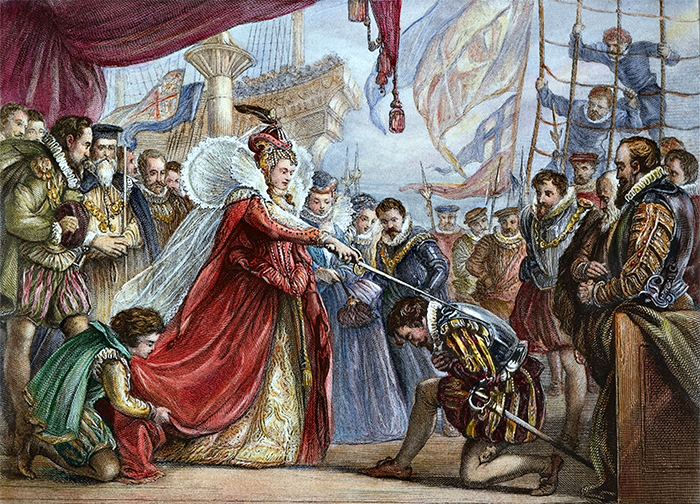
On this day, Francis Drake, the famous Elizabethan explorer, sea captain and pirate, was awarded a knighthood by Queen Elizabeth I on board his ship, the Golden Hind, at Deptford. The knighthood was a reward for Drake’s 1577-1580 expedition, which saw him plundering Spanish ports, capturing Spanish ships, circumnavigating the globe, and more importantly, bringing back a rich cargo of treasure and spices for his queen. To commemorate his successful circumnavigation, Drake presented Elizabeth with a jewel from Mexico made of enamelled gold decorated with an African diamond and a ship with an ebony hull. In return, Elizabeth presented Drake with a jewel and a portrait of herself.

Puoi trovare altre brevi notizie storiche QUI


Your comments are always very welcome.


The Union of the Crowns

24th March 1603

On this day, the English and Scottish crowns were united for the first time when King James VI of Scotland [1567-1625] became King James I of England and Ireland on the death of his cousin Queen Elizabeth I, the last Tudor monarch. After the Union of the Crowns, James based himself in England and styled himselfKing of Great Britain and Ireland“. Although he tried hard to establish a closer political union, the kingdoms of Scotland and England remained sovereign states, with their own parliaments, judiciaries, and laws. In Scotland, James achieved his aims, but he faced great difficulties in England, including the Gunpowder Plot in 1605 and conflicts with the English Parliament. During his reign, the Golden Age of Elizabethan literature and drama continued, with writers such as William Shakespeare, John Donne, and Francis Bacon contributing to a flourishing literary culture.

Puoi trovare altre brevi notizie storiche QUI


Your comments are always very welcome.


Pope Pius V Excommunicates Queen Elizabeth I

25th February 1570

On this day Pope Pius V issued a papal bull ‘Regnans in Excelsis‘ (Reigning on High) in which he formally excommunicated Queen Elizabeth I of England, referring to her as “the pretended Queen of England and the servant of crime.” It also released her subjects from allegiance to her and excommunicated anybody who obeyed her orders. The Papal Bull accused the Queen of oppressing the followers of the Catholic faith and was issued after the failed Rising of the North and the first Desmond Rebellion in Ireland in 1569, and was clearly a delayed response to the English Parliament’s Act of Supremacy of 1559, which re-established the Church of England and Church of Ireland’s independence from papal authority.

Puoi trovare altre brevi notizie storiche QUI


Your comments are always very welcome.

Mary Queen of Scots Beheaded

8th February 1587

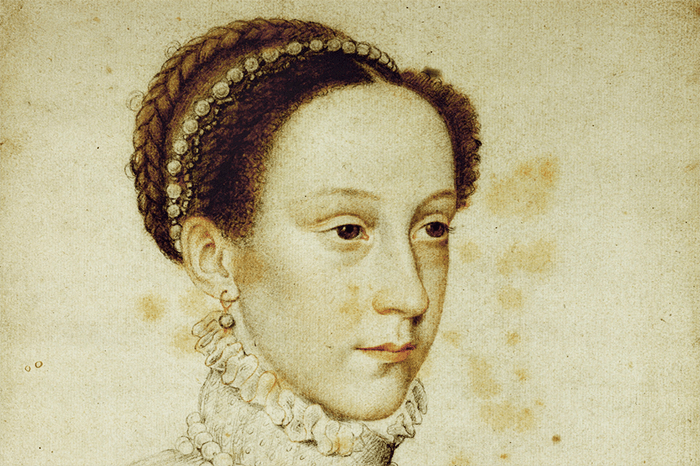
On this day, Mary Queen of Scots was beheaded in the Great Hall of Fotheringhay Castle by order of Queen Elizabeth I. The rivalry between the two queens had been brewing for years with Mary claiming the English throne for herself and Elizabeth scared of a possible united Scottish and French Catholic rebellion. After almost twenty years of confinement in various castles and manor houses in England, Mary was eventually tried for her role in the Babington plot to assassinate Elizabeth. Unsurprisingly, she was found guilty of treason and Elizabeth had little choice but to sign her death warrant. It took three strokes to detach her head, and when the executioner held it up for the public to see, he was left with an auburn wig in his hand as Mary’s head fell to the floor revealing that she actually had very short grey hair.

Puoi trovare altre brevi notizie storiche QUI


Your comments are always very welcome.