
Piccole letture in chiave umoristica e/o filosofica
Perché non provi inizialmente ad ascoltare l’audio senza leggere il testo?
Per sapere il significato delle parole evidenziate, passaci sopra con il mouse senza cliccare.

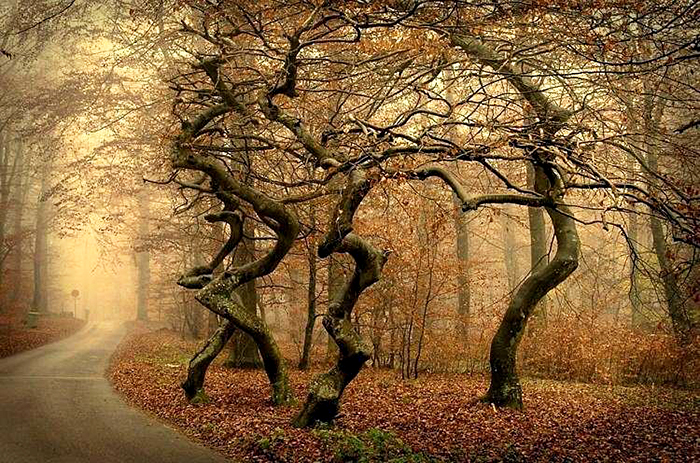
In the forest, there were straight trees and there were crooked trees.
Every day, the straight trees would say to the crooked trees, “Look at us, we’re tall, straight and handsome. Look at you, you’re short, crooked and ugly. No one walking through the forest will ever want to look at you.”
The trees grew up together, side by side, year after year, with the tall, straight, handsome trees insulting the short, crooked, ugly trees every single day.
Then, one day, the lumberjacks came into the forest. They saw the straight trees and the crooked trees, and the head lumberjack said, “Just cut down the straight trees and leave all the others.”
So the lumberjacks turned all the straight trees into lumber, planks, posts, toothpicks and paper.
Today, the crooked trees are all still there in the forest, growing stronger and stranger every day.

Your comments are always very welcome.

 Ingliando
– Every day, the straight trees would say to the crooked trees, ——> would say
would (past tense of will ) can be used instead of “used to” to say that we used to do something. Am I right? Is that so?
can I also say?
– when I lived in Cagliari I would go to the sea every week end
– quando vivevo a Cagliari ero solito andare al mare ogni fine settimana
many thanks
LikeLiked by 1 person
Exactly, Giovanna. But remember that the “would” version tends to be used more in written English and not much in spoken English.
LikeLiked by 1 person
I always wonder why….. I sometimes spend hours on the internet looking for an explanation to my doubts or to fill my deficit. Thanks Tony
LikeLike
I think it just tends to sound rather more formal than the “used to” version.
LikeLiked by 1 person
So lovely 🌳🌳🌳
LikeLiked by 1 person
Thanks, Luisa. 🙂
LikeLiked by 1 person
You’re most welcome ❣️
LikeLiked by 1 person