The First Modern State to Abolish the Death Penalty

30th November 1786

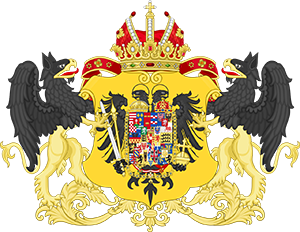
On this day, after having de facto blocked capital executions (the last was in 1769), Leopold I, the Grand Duke of Tuscany, promulgated the reform of the penal code that made Tuscany the first nation in modern history to abolish the death penalty. He also ordered the destruction of all the instruments for capital execution in his land and banned all forms of torture. This act has been commemorated since 2000 by a regional custom known as the Feast of Tuscany, held every 30th November. Although not particularly popular with his Italian subjects, Leopold’s steady, consistent and intelligent administration, which included the removal of the ruinous restrictions on industry and personal freedom imposed by his predecessors of the House of Medici, brought the grand duchy to a high level of material prosperity. The historian Paul W. Schroeder has called him “one of the most shrewd and sensible monarchs ever to wear a crown”.
Puoi trovare altre brevi notizie storiche QUI


Your comments are always very welcome.

The Zong Massacre

29th November 1781

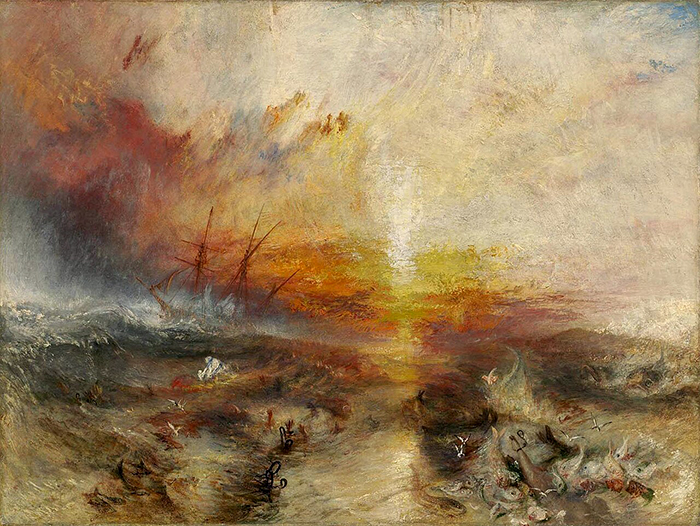
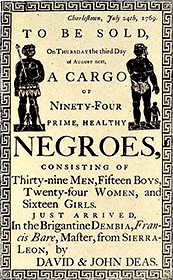
On this day and the days following, the crew of the British slave ship Zong massacred 143 enslaved Africans. The ship, with its ‘cargo‘ of 442 slaves – more than twice the number it could safely transport – left Africa on 6th September, but a breakdown in the chain of command, negligence and major navigational errors led to a serious lack of drinking water. Overcrowding, malnutrition, and disease had already killed several mariners and approximately 62 Africans, and the remaining crew members unanimously agreed to resolve the water shortage by throwing slaves into the ocean. The news that a mass murder had taken place aboard a British ship, and that the ship’s owners intended to profit from it through an insurance claim, fuelled the abolitionist movement which finally succeeded in having Parliament abolish the slave trade in the British Empire in 1807 and abolish slavery itself in most of the British colonies in 1833.

Puoi trovare altre brevi notizie storiche QUI


Your comments are always very welcome.

The Foundation of the Royal Society

28th November 1660

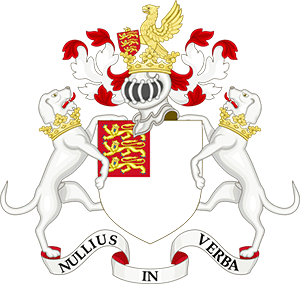
On this day in London, a meeting at Gresham College of 12 natural philosophers decided to commence a “Colledge for the Promoting of Physico-Mathematicall Experimentall Learning“. Amongst those founders were Christopher Wren, Robert Boyle, John Wilkins, William Brouncker and Robert Moray. At the second meeting, Sir Robert Moray announced that the King approved of the gatherings, and a royal charter was signed on 15 July 1662 which created the “Royal Society of London”. A second royal charter was signed on 23 April 1663, with the king noted as the founder and with the name of “the Royal Society of London for the Improvement of Natural Knowledge”. The society fulfils a number of roles: promoting science and its benefits, recognising excellence in science, supporting outstanding science, providing scientific advice for policy, education and public engagement and fostering international and global co-operation. The Royal Society is the oldest continuously existing scientific academy in the world.

Puoi trovare altre brevi notizie storiche QUI


Your comments are always very welcome.


The Berners Street Hoax

27th November 1810

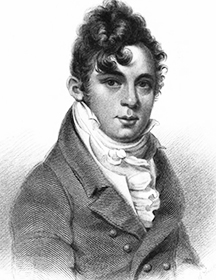
On this day, after several weeks of preparation, the writer Theodore Hook made an apparently spontaneous 1 guinea bet with a friend that he could transform any property into the most talked-about address in London. Hook spent six weeks sending a huge number of letters to tradespeople and businesses ordering deliveries of their goods and services to 54 Berners Street, Westminster, at various times on 27 November. He also invited several well-known people to call on the address. The house was chosen, apparently at random, during a walk, and Hook and his friends hired rooms in the house opposite for the day. From 5.00 a.m. onwards N°54 was inundated with deliveries of every kind imaginable. The chairmen of the Bank of England and the East India Company, and the Duke of Gloucester, all turned up during the day, as did an undertaker with a coffin. Police were unable to hold back the crowds of amused onlookers who did not disperse until early evening.

Theodore Hook

Puoi trovare altre brevi notizie storiche QUI


Your comments are always very welcome.

The Discovery of Tutankhamun’s Tomb

26th November 1922

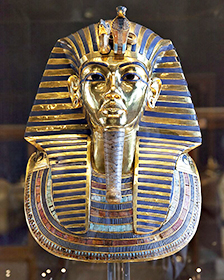
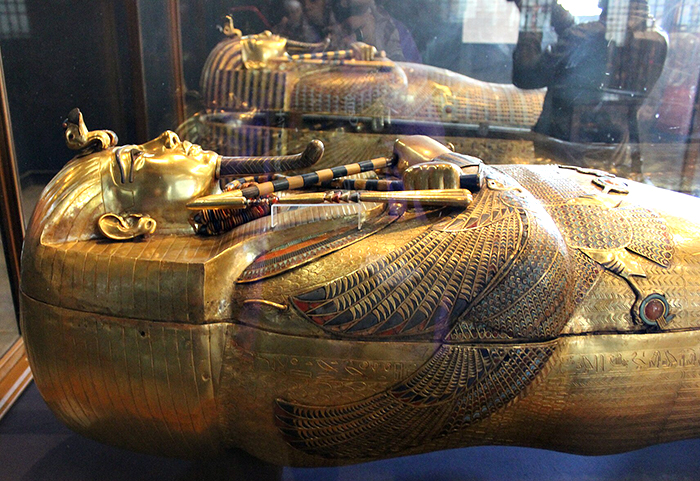
On this day, in the Valley of the Kings in Egypt, three weeks after discovering the top of the entrance staircase, the archaeologist Howard Carter and his patron George Herbert, 5th Earl of Carnarvon, finally reached the antechamber of the tomb of the Pharoah Tutankhamun. What they found inside exceeded all expectations and provided unprecedented insight into the true nature of a royal burial. The contents of the tomb are, in fact, by far the most complete example of a royal set of burial goods in the Valley of the Kings, numbered at 5,398 objects. The spectacular nature of the tomb goods inspired a media frenzy, dubbed “Tutmania”, that made Tutankhamun into one of the most famous pharaohs, often known by the nickname “King Tut”. Most of the tomb’s goods were sent to the Egyptian Museum in Cairo and are now on display in the Grand Egyptian Museum in Giza.

Puoi trovare altre brevi notizie storiche QUI


Your comments are always very welcome.


Agatha Christie’s The Mousetrap

25th November 1952

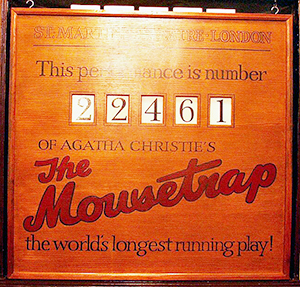
On this day, Agatha Christie’s stage play “The Mousetrap” opened at the Ambassadors Theatre in London’s West End after a brief pre-West End tour starting on 6th October at the Theatre Royal in Nottingham. The play is a classic whodunit murder mystery with a twist ending which the audience is traditionally asked not to reveal on leaving the theatre. Much to the surprise of both Christie and the producer, Peter Saunders, the play was destined to become the longest-running West End show ever, stopping only once, for just over a year, during the Covid pandemic in 2020. The play began life as a short radio play written as a birthday present for Queen Mary and was originally broadcast on 30 May 1947 under the name “Three Blind Mice”. Later, it had to be renamed at the insistence of Emile Littler, who had produced a play called Three Blind Mice in the West End before the Second World War.

The wooden counter in St Martin’s Theatre

Puoi trovare altre brevi notizie storiche QUI


Your comments are always very welcome.

The D.B. Cooper Hijack Mystery

24th November 1971

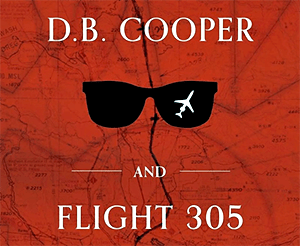
On this day, a man calling himself Dan Cooper and later wrongly reported as D.B. Cooper, hijacked Northwest Orient Airlines Flight 305 bound for Seattle. On board, he told the flight crew he had a bomb, and demanded $200,000 in ransom ($1,600,000 in 2024) and four parachutes. Upon landing in Seattle, the money and parachutes were brought on board and Cooper released the passengers. He then directed the crew to refuel the aircraft and begin a second flight to Mexico City. Once in the air, he opened the aircraft’s aft door and parachuted to an uncertain fate over Washington. For forty-five years after the hijacking, the Federal Bureau of Investigation maintained an active investigation and built an extensive case file, but ultimately did not reach any definitive conclusions about Cooper’s identity or fate, though they speculate Cooper probably did not survive his jump. The crime is the only documented unsolved case of air piracy in the history of commercial aviation.

Puoi trovare altre brevi notizie storiche QUI


Your comments are always very welcome.

The Manchester Martyrs

23rd November 1867

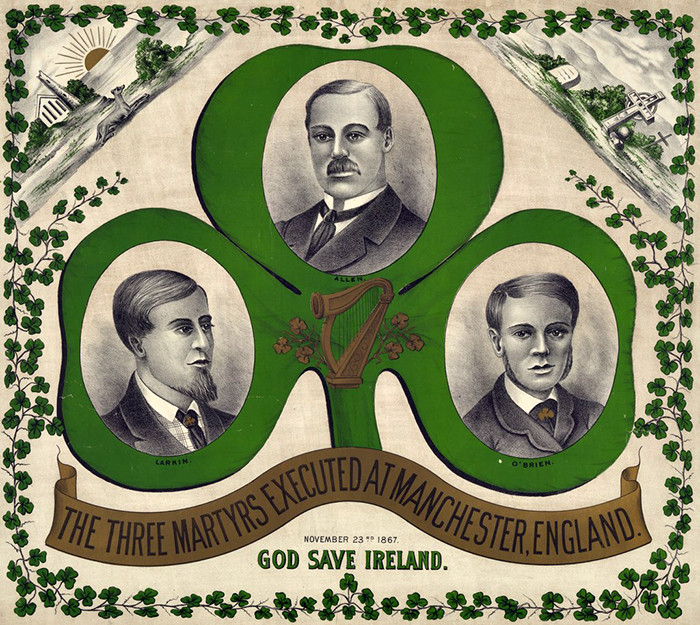
On this day, three members of the Irish Republican Brotherhood, an organisation dedicated to the ending of British rule in Ireland, were hanged in front of a huge crowd outside the walls of Salford Gaol. The three men, William Allen, Michael Larkin and Michael O’Brian were convicted of murdering a police officer while attempting to rescue two leaders of the Brotherhood who were being transported in a horse-drawn police van to Belle Vue Gaol. Unable to force the lock on the van, one of the rescuers placed his pistol at the keyhole of the van to blow the lock, just as the police officer looked through the keyhole to see what was happening outside. The bullet passed through his eye into his brain and killed him. Although none of the defendants was accused of firing the fatal shot, all three were convicted on the basis of joint enterprise for taking part in a criminal enterprise that ended in the killing. Ireland reacted with revulsion and anger to the executions and hailed the three men as political martyrs.

Irish Republican Brotherhood

Puoi trovare altre brevi notizie storiche QUI


Your comments are always very welcome.