
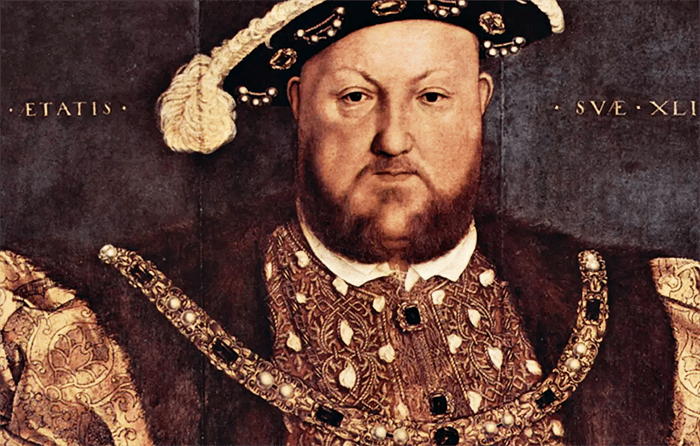
The First Act of Supremacy

3rd November 1534

On this day, the Parliament of England passed the first Act of Supremacy which confirmed the royal supremacy of King Henry VIII of England and subsequent monarchs and stated that the reigning monarch was the supreme head of the Church of England. The wording of the act made it clear that Parliament was not granting the king the title, but was simply acknowledging an established fact. In the Act of Supremacy, Henry VIII withdrew support for the authority of the Pope and the Catholic Church and asserted the independence of the Ecclesia Anglicana. He subsequently passed the Treasons Act 1534, which stated that to disavow the Act of Supremacy was to be considered treason. Thus, the king’s control over the English religion was absolute and those who held to Catholic beliefs were swiftly punished. The most famous public figure to resist the Treasons Act was Sir Thomas More, who was convicted of treason and executed by beheading.

Puoi trovare altre brevi notizie storiche QUI


Your comments are always very welcome.
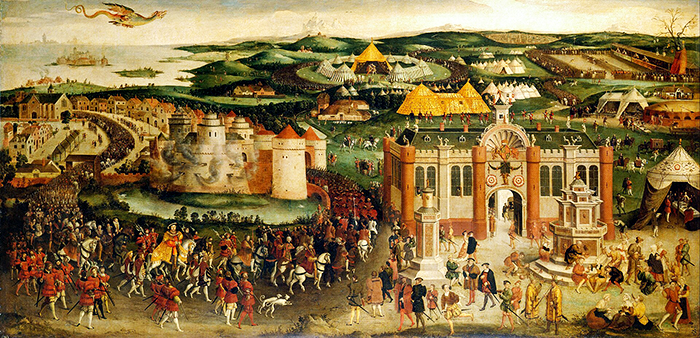

The Field of the Cloth of Gold

7th June 1520

On this day, at Balinghem in France, King Henry VIII of England and King Francis I of France held a summit meeting to increase their bond of friendship following the Anglo-French treaty of 1514. Both Henry and Francis wished to be seen as Renaissance princes and the meeting was designed to show the magnificence of each court and how this could be a basis for mutual respect and peace between states that were traditional enemies. Each king tried to outshine the other, with dazzling tents and clothes, huge feasts, music, jousting and games. The tents and the costumes displayed so much cloth of gold, an expensive fabric of silk and gold thread, that the site of the meeting was named the ‘Field of the Cloth of Gold‘.

Puoi trovare altre brevi notizie storiche QUI


Your comments are always very welcome.
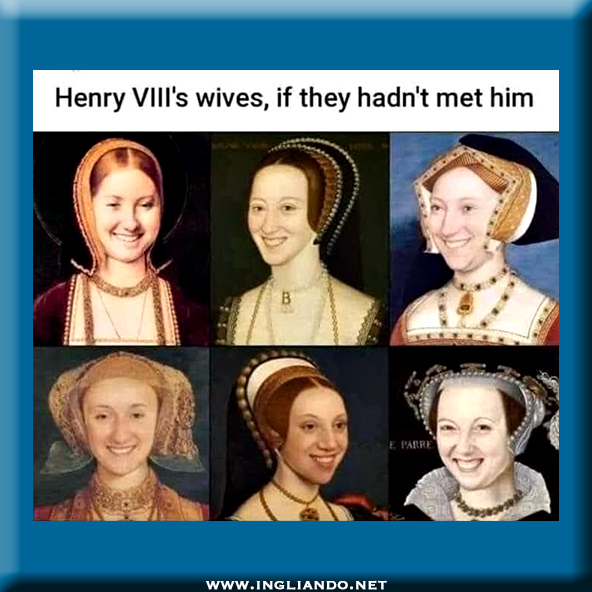

Humour inglese: Henry VIII


Your comments are always very welcome.


King Henry VIII: Westminster Tournament Challenge

12th February 1511

On this day, King Henry VIII of England commissioned the ‘Westminster Tournament Challenge‘ in honour of the birth of his son Prince Henry to his wife Catherine of Aragon. The King wanted a pictorial record of his tournament so he commissioned a Roll of Honour in the form of a 60-foot long illustrated manuscript which still survives today. Apart from the King himself and other officials and dignitaries, the manuscript shows six trumpeters including a black musician by the name of John Blanke (the surname is possibly a play on the French or Spanish word for ‘white’). John Blanke is the only identifiable black person in 16th century English art and probably came to England with Catherine of Aragon’s entourage.

Puoi trovare altre brevi notizie storiche QUI


Your comments are always very welcome.


Pope Threatens Henry VIII with Excommunication

5th January 1531

On this day Pope Clement VII sent a letter to King Henry VIII of England forbidding him to remarry under penalty of excommunication. Henry wanted his marriage to Catherine of Aragon annulled, partly because she seemed incapable of producing an heir to the throne and partly because he had already become infatuated with Anne Boleyn. Although originally a staunch Catholic, Henry decided that excommunication was the lesser of two evils and issued a series of decrees ending the supremacy of the Catholic Church and establishing the Church of England. It was a move that would bring about centuries of political, religious and military conflict in England and Europe.

Puoi trovare altre brevi notizie storiche QUI


Your comments are always very welcome.